Running a gym
How to reduce overdue membership fees at a small gym
Most overdue fees are forgotten rather than refused. Seven habits that get members paying on time.
The M4GYM team
· 4 min read
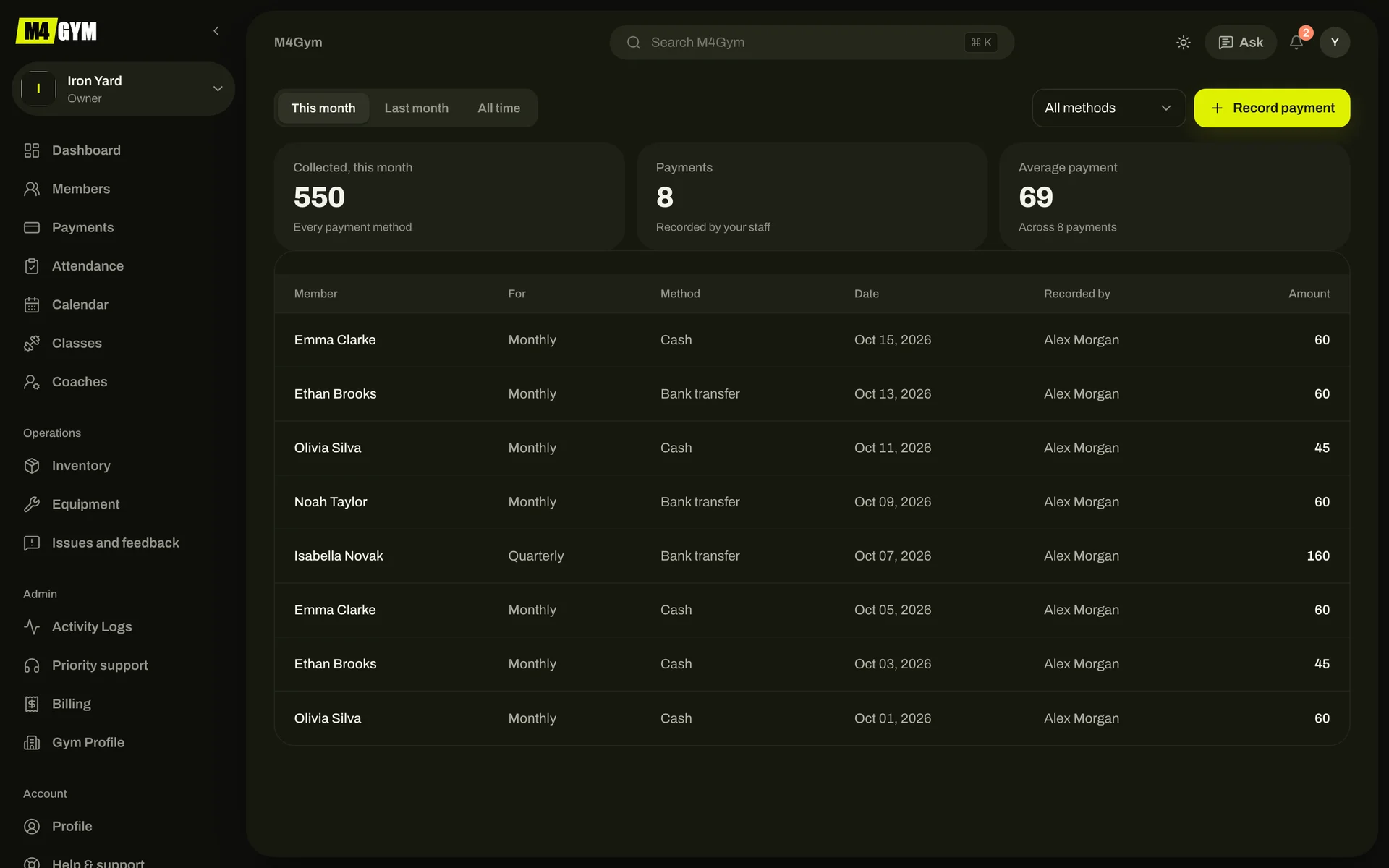
In most small gyms, fees are paid at the desk in cash or by bank transfer, and someone keeps track in a register, a spreadsheet or their head. When a fee goes overdue it is rarely because the member has decided not to pay. They forgot, they assumed someone else in the family paid, or nobody mentioned it.
These seven habits help, and none of them needs an awkward conversation at the front desk.
1. Give every member one clear due date
Decide how your gym bills and stick to it. Either everyone pays on the same day of the month, or each member pays on the day they joined. Both work. What doesn’t work is a mix, because then nobody, staff included, knows who is due this week.
Write the due date down when someone joins, and tell them it out loud. It is the single most useful thing you can do.
2. Know who is due before they walk in
Spend two minutes each morning looking at who is due this week and who is already late. When that person checks in, the desk can say “your fee is due on Friday” as a friendly reminder rather than chasing them weeks later.
3. Remind before the due date, not after
A message three days before a fee runs out feels like service. The same message a week after it ran out feels like a demand. Early reminders are the cheapest way to cut overdue fees, and most members appreciate them.
4. Make paying the easy part
If a member has to ask for your bank details every month, some won’t bother. Put the account details on a card at the desk and in your welcome message, accept the methods people actually use, and give a receipt every time.
5. Record every payment the moment it’s made
A list of who owes money is only useful if it is right. If payments are written up at the end of the week, the list is wrong for days, and the one time you remind someone who has already paid, you lose their trust in the list. Record it at the desk, while the member is still standing there.
6. Have a written grace period
Decide what happens when a fee is late: for example, seven days of grace, then classes are paused until it is paid. Tell members when they join and put it on the wall. A rule everyone knows about isn’t personal when you apply it.
7. Talk to the long-overdue in person, privately
For the few who are weeks behind, a short, private conversation works better than another message. Often there is a reason: money is tight this month, or they have been injured and stopped coming. Offering to pause a membership keeps a member you would otherwise lose.